Managing the access cavity (ASE member: online)
[ASE member: live stream]
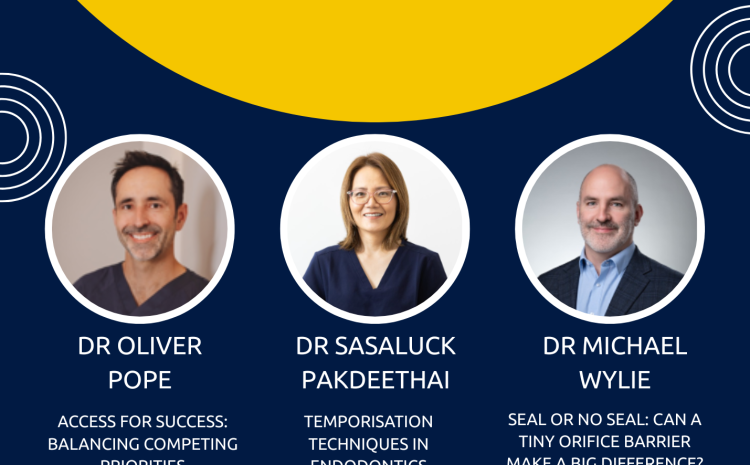
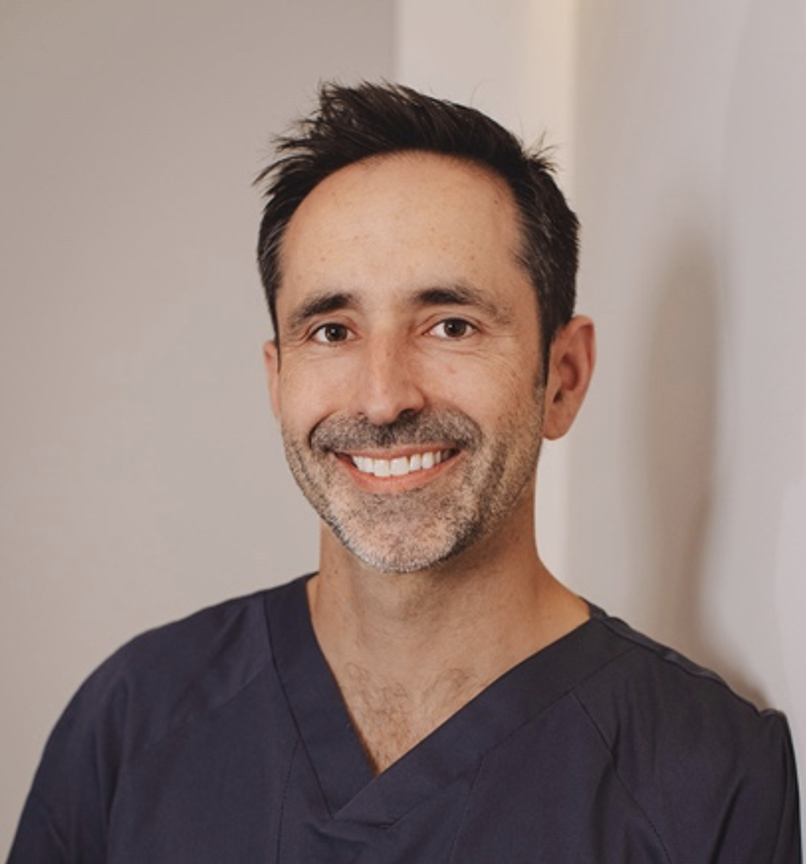
| Dr Oliver Pope | Dr Sasaluck Pakdeethai | Dr Michael Wylie |
 |  |  |
| BDSc (Hons), DCD (Endo), MRACDS (Endo), FPFA, FICD | BDS, DCD (Endo), FRACDS, MRACDS (Endo), GCertDent, FICD | BDS, MDGDP (UK), FRACDS (GDP), FCGDent |
Speaker Biographies
Dr Oliver Pope graduated from the University of Queensland, receiving a Bachelor of Dental Science with First Class Honours. The early years of his dental career were spent as a Dental Officer in the Royal Australian Navy, through which he completed multiple deployments. After a period of working in general dental practice, he completed a Doctorate in Clinical Dentistry in Endodontics at the University of Melbourne. He was the recipient of the inaugural Ephraim Ehrmann Prize in Endodontics for best overall performance in the degree and his heavily cited research into Cone-Beam Computed Tomography has been published in the international Journal of Endodontics.
Dr Pope is a past President of the Australian Society of Endodontology and a member of the Australian New Zealand Academy of Endodontists and Australian Dental Association. Dr Pope maintains close ties with the University of Melbourne and La Trobe University lecturing and demonstrating for dental students. Dr Pope is also heavily involved in the continued professional development of dentists, teaching both overseas and Australian trained dentists.
Dr Sasaluck Pakdeethai graduated from the Bachelor of Dental Surgery (BDS) from the University of Sydney in 2004. She practiced general dentistry for five years and gained invaluable experience in Regional Victoria and Melbourne. During this time, she also completed her Graduate Certificate in Dentistry (Adel) programme and became a fellow of the Royal Australasian College of Dental Surgeons (FRACDS). With passion and interest in endodontology, she returned to university for further training in this field and in 2012, received her Doctor of Clinical Dentistry (Endo) degree from the University of Melbourne.
Sass has been working full-time in private endodontic practice since 2013, providing endodontic services in the western suburbs of Melbourne. In 2025, Sass established Elite Endodontics in Werribee and Caroline Springs (previously named Caroline Springs Dental Specialists). Apart from clinical practice, Sass has been actively involved in postgraduate teaching at the University of Melbourne. She is a member of the Australian Dental Association (ADA), Australian Society of Endodontology (VIC branch) and Australian and New Zealand Academy of Endodontists. Sass has served on various committees over the years and was awarded Fellow of the International College of Dentists (FICD) for her contributions.
Dr Michael Wylie is a Senior Lecturer in General Dentistry at the University of Melbourne, convening the complex conservative dentistry program and lecturing in dental materials science, and is a practising clinician of 25 years in private practice. He is also a PhD candidate at the Melbourne Dental School and is a Fellow of the RACDS, and examiner for the Australian Dental Council and the MRACDS program, Treasurer/Secretary of the IADR Dental Materials Group (VIC) and a committee member of the ASEVB.
Lecture Synopsis
- Access for Success: balancing competing priorities (Dr Oliver Pope)
The access cavity is a critical component to the long-term success of endodontic treatment. Minimally invasive access cavities aim to preserve tooth structure but smaller access can introduce clinical challenges – is smaller always better? The real goal is directed dentine conservation. This lecture presents a practical, balanced approach to access design, focusing on decision making, canal location and when to modify to maintain predictability.
2. Temporisation Techniques in Endodontics (Dr Sasaluck Pakdeethai)
Endodontic treatment aims to eliminate or prevent apical periodontitis by removing necrotic pulp and intracanal bacterial infection, or irreversibly inflamed pulp from the root canal system. Temporisation of teeth during endodontic treatment can influence the overall outcome of endodontically treated teeth and adequate temporary restorations are essential in multi-visit RCT or when definitive restorations are delayed. This presentation will explore reasons for temporisation of teeth during endodontic treatment, and common temporisation techniques and materials used.
3. Seal or no seal: can a tiny orifice barrier make a big difference?(Dr Michael Wylie)
Orifice barriers are commonly placed as sub-seals following root canal treatment, to resist microbial leakage if the primary coronal seal fails. This lecture will discuss the current evidence for orifice barriers and the limitations of such studies, and preferences for use among Australian practitioners.
Recommended Reading
Clark, D., & Khademi, J. A. (2010). Case studies in modern molar endodontic access and directed dentin conservation. Dental Clinics, 54(2), 275-289.
Clark, D., & Khademi, J. (2009, October). Modern endodontic access and dentin conservation. Part 1. Dentistry Today. October 2009.
Jensen A, Abbott PV, Salgado J (2007) Interim and temporary restoration of teeth during endodontic treatment. Australian Dental Journal 52(1), S83-S99.
Davis, M. C., & Shariff, S. S. (2019). Success and Survival of Endodontically Treated Cracked Teeth with Radicular Extensions: A 2- to 4-year Prospective Cohort. Journal of Endodontics, 45(7), 848–855. doi:10.1016/j.joen.2019.03.015
Chen, P., Chen, Z., Teoh, Y., Peters, O., & Peters, C. (2023). Orifice barriers to prevent coronal microleakage after root canal treatment: systematic review and meta-analysis. Australian Dental Journal. Doi:10.1111/adj.12951